
Artificially Intelligent Robotic Assistant
AIRA
- Built In Reality. Designed For The Future. -
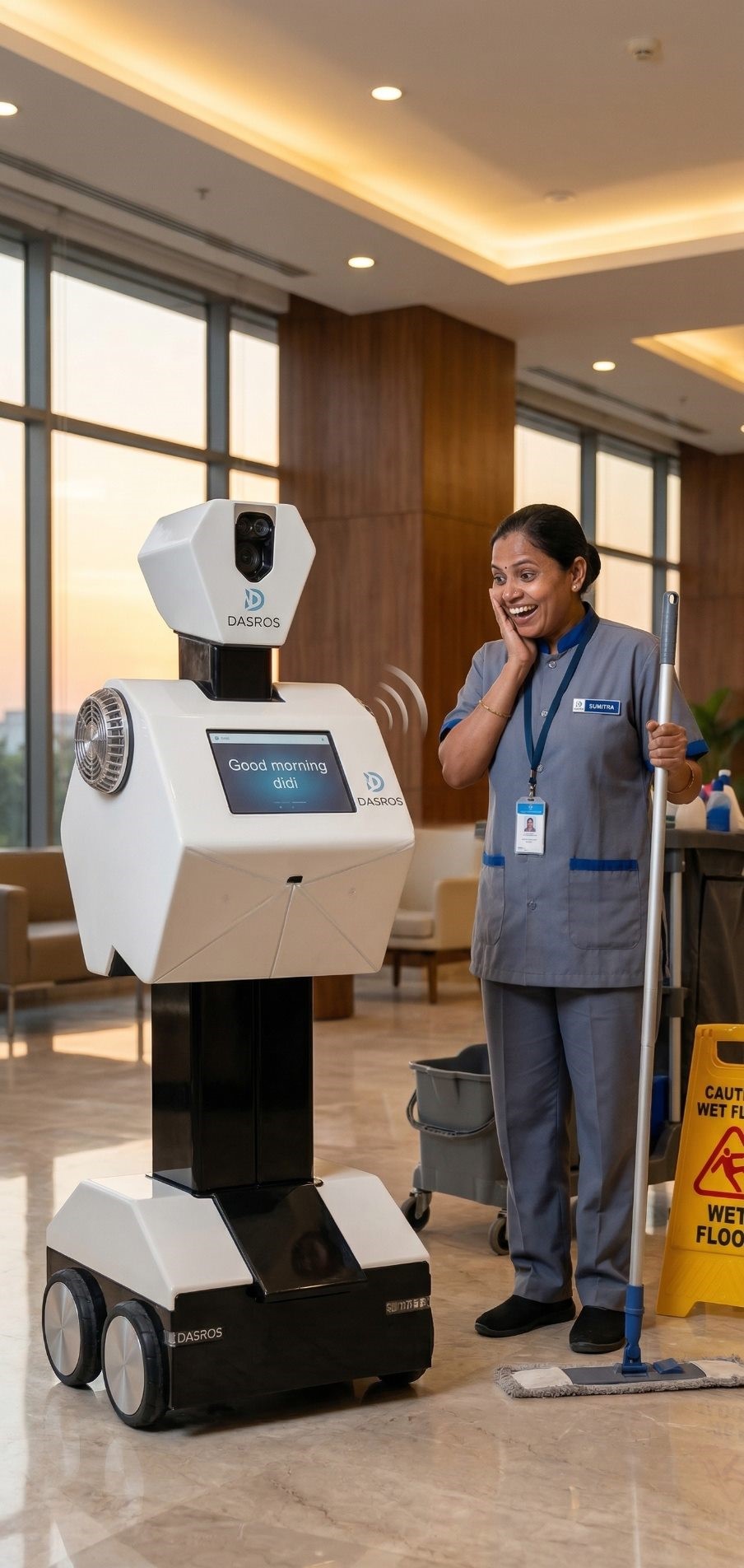
A smart robot built by DASROS to help people in real places — schools, hospitals, offices — by handling everyday tasks so humans can focus on what matters most.
- Problem -
Human Effort Is Being Wasted
Doctors, teachers, and office workers spend too much time on repetitive tasks that don't need their skills — like filing, fetching, or answering the same questions over and over.

The missing support layer
Not A Workforce Problem
AIRA is the helper that's been missing — it takes care of repetitive tasks so people can spend more time on real work like teaching, caring for patients, and making decisions.
This isn't about replacing people. It's about giving them a capable assistant right where they work.
- Origin -
The NEEV Phase
AIRA began with a ₹20,000 government startup grant (NEEV Program) plus ₹10,000 from the founder's own pocket — enough to turn a student's idea into a working robot.
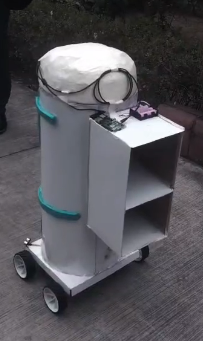
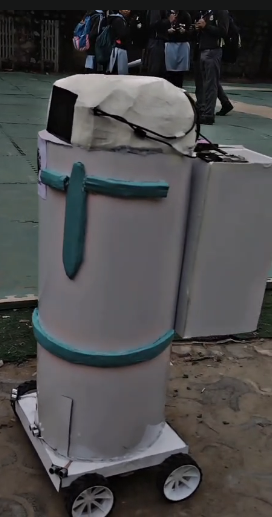
- Prototype -
From Idea To Machine
Phase 2 engineering
Built To Validate The Question
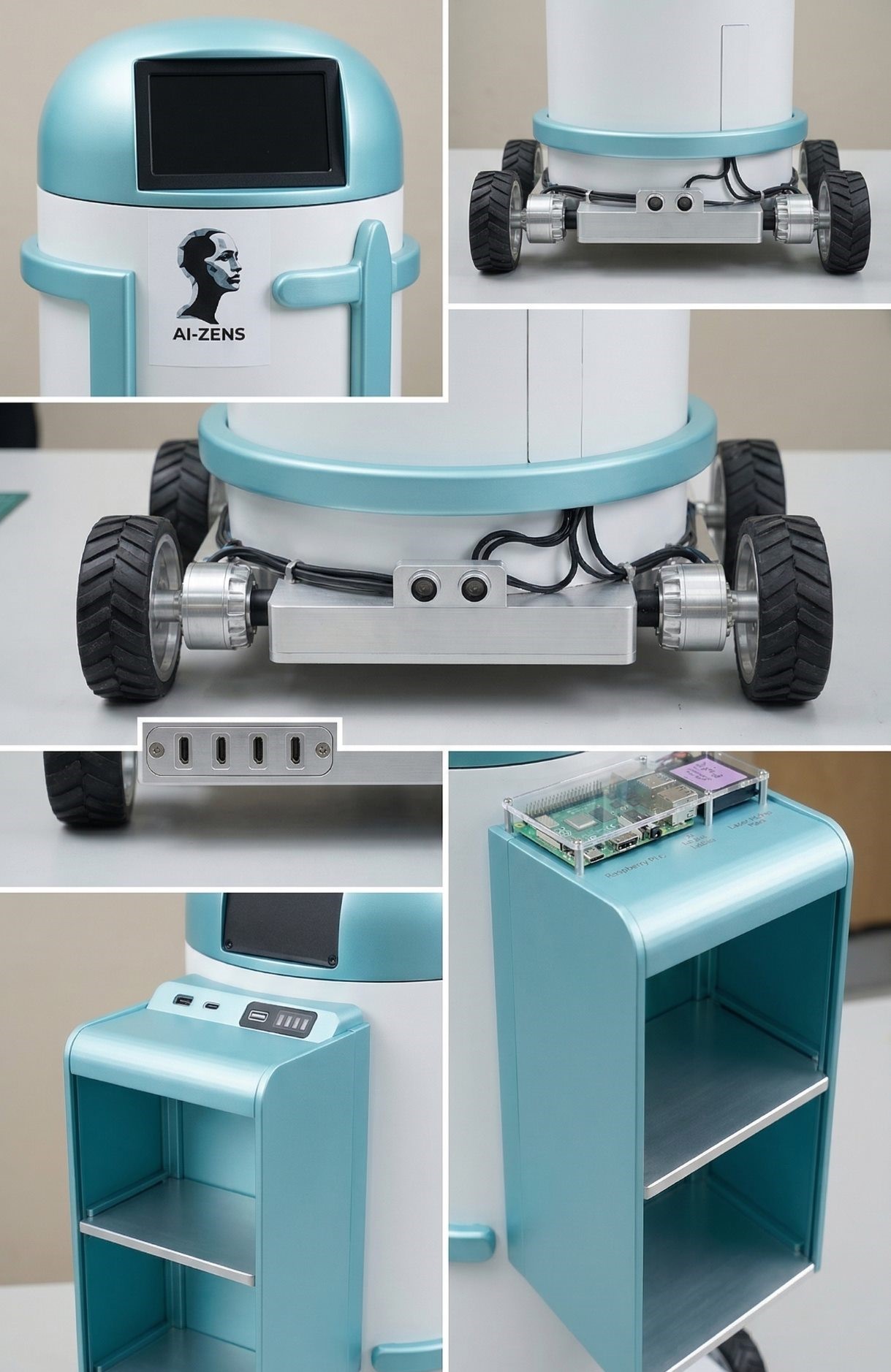
The first prototype wasn't meant to be perfect. It was built to answer one question: can we make a robot that moves, has a screen, and is simple enough for anyone to use?
- Software -
The Brain Behind The Face
AIRA's software is built to run on basic hardware, work on school Wi-Fi, and be simple enough that anyone can use it — no tech background needed.
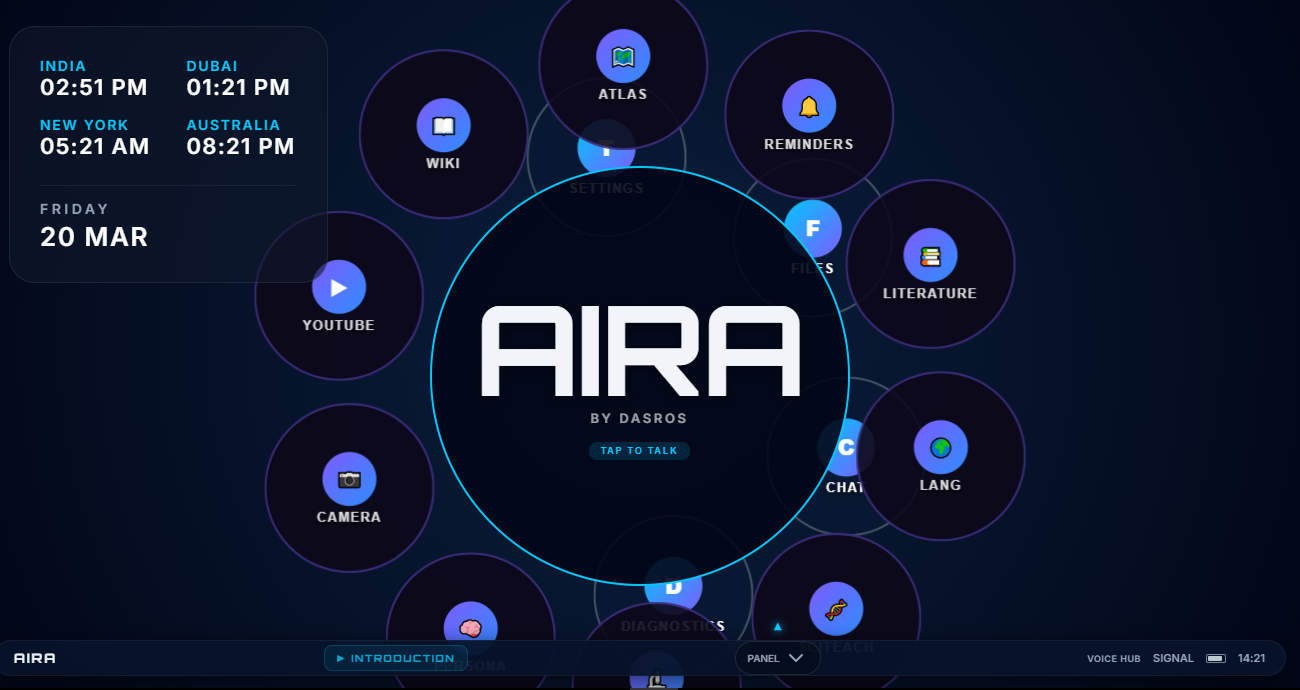
Single-window assistant OS
One Startup. One Browser. AIRA Live.
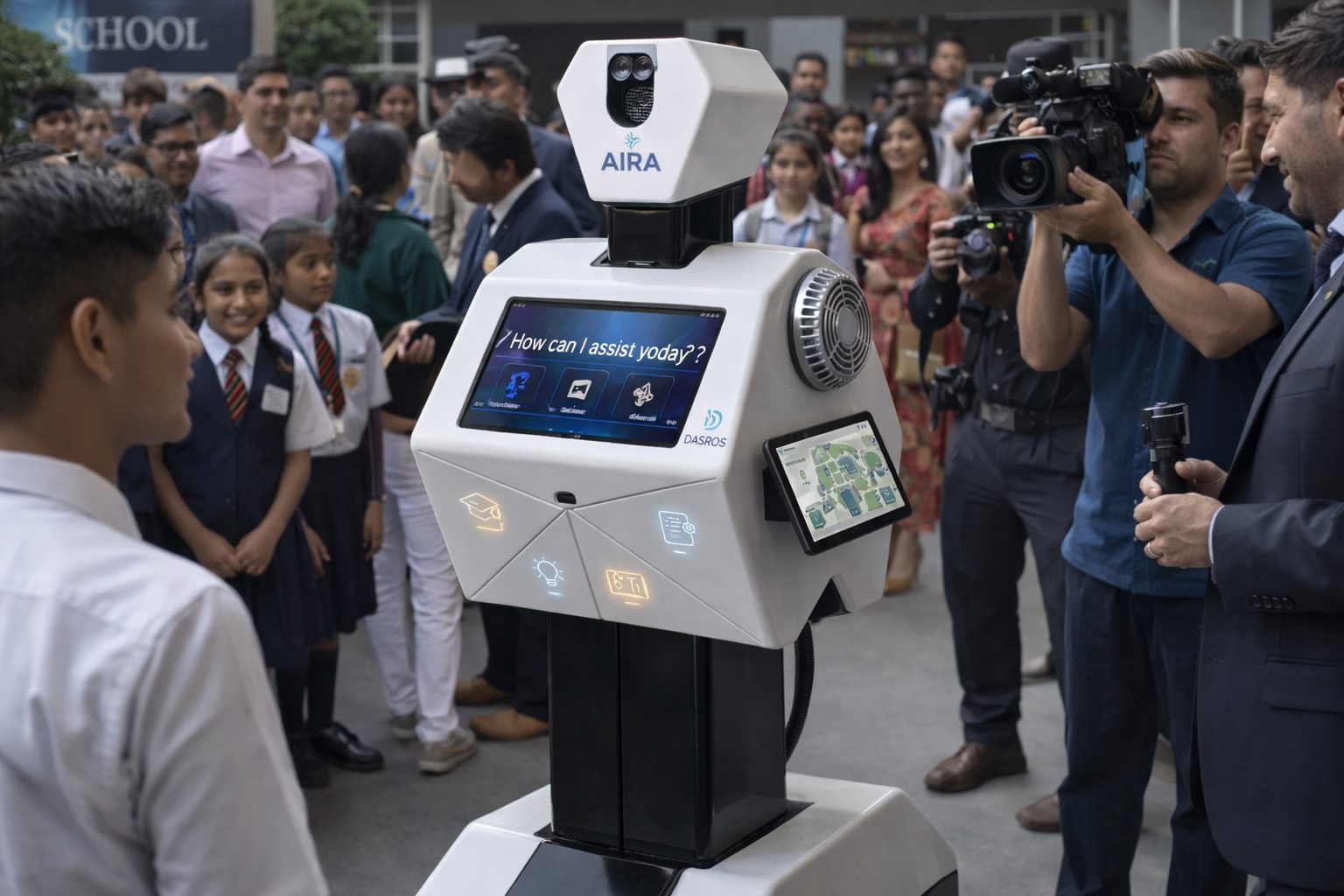
AIRA's screen shows a central hub with tools for learning, chatting, camera, reminders, files, language help, and more — all in one place.
The software is what makes AIRA more than just a machine on wheels — it can answer questions, guide people, run tools, and keep attention in busy settings.
- Deployment -
Deployed. Demonstrated. Real.
AIRA was placed in a real school where students, teachers, parents, and media could walk up, interact with it, and see it work firsthand.
- Numbers -
Commercial Validation
AIRA went from a grant-funded student project to attracting real investor support, with actual production costs worked out.
₹20,000 + ₹10,000
Government grant plus personal savings funded the very first working robot prototype.
₹60,000 + ₹20,000
After successful demos, an investor backed AIRA with additional funding to take it further.
₹45,000 Cost
The real cost to build one AIRA unit came in at a level that makes commercial production possible.
- Credits -
Build Teams & Roles
AIRA was built in two major phases, each with its own team and roles.
NEEV Prototype Phase
Abhinav led the project direction and product vision. Prajjawal Kr. Rai and Vishal Vishwakarma worked in co-lead roles, with Manas Joshi and Alok Joshi supporting the early build phase.
Live Deployment Phase
Abhinav continued in the lead role, with Prajjawal Kr. Rai and Vishal Vishwakarma as co-leads for the real-world deployment evolution and public demonstration phase.
- Future Vision -
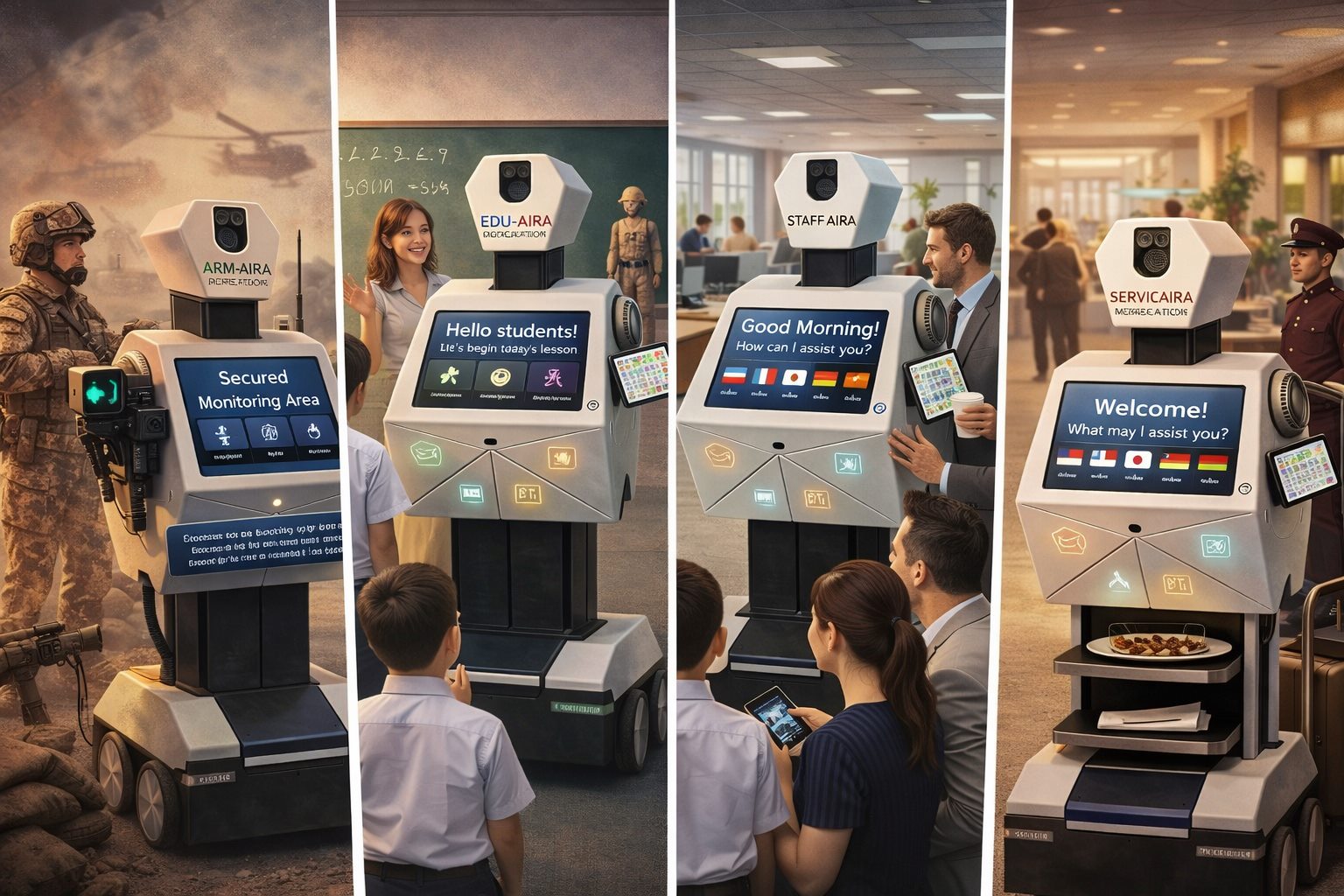
One Platform. Five Industries.
AIRA isn't one fixed robot — it's a flexible platform that can be customized for different industries and workplaces.
Sector adaptation
AIRA Changes With The Environment
There are versions planned for hospitals (Med-AIRA), restaurants and hotels (Service-AIRA), offices (Staff-AIRA), schools (Edu-AIRA), and defence (Army-AIRA).
Every version shares the same core: a physical robot body, smart software, and a design centered around helping people.
- Applications -
Sector Roles
Med-AIRA
Helps with patient check-in, bed tracking, medicine delivery, health monitoring, and supply runs.
Service-AIRA
Assists in restaurants and hotels — guiding guests, helping with orders, and coordinating service.
Staff-AIRA
Greets visitors, manages reminders, routes messages, and handles routine office tasks.
Edu-AIRA
The version already tested in schools — teaches, answers student questions, runs science modules, and supports learning.
Army-AIRA
Built for tough environments — monitoring, field support, restricted-area assistance, and rugged conditions.
Cloud AI
All of AIRA's smart assistant features, but as software only — no robot body needed.
AIRA is not just a robot. It is a workforce companion: built to assist, interact, and make routine work feel less alone.